
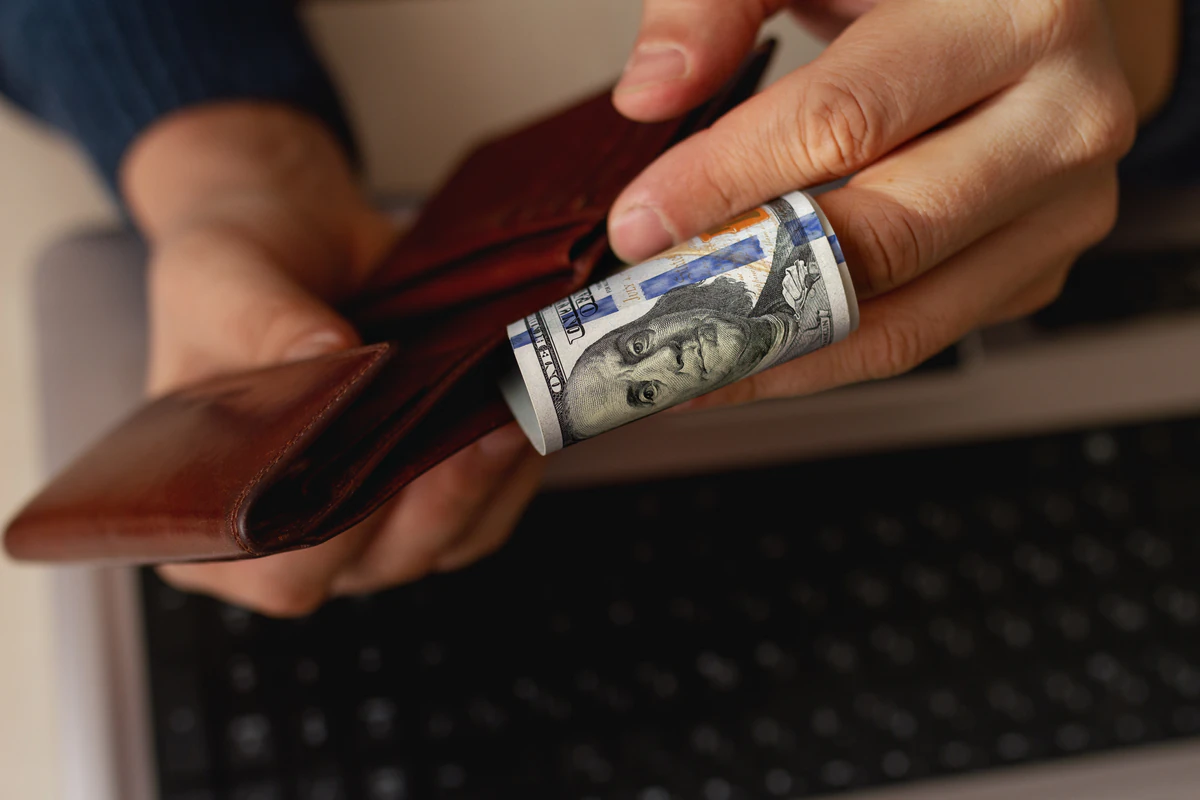
Keep your money in dollars. Move it without a fee.
With Dovizir you hold your money as Tether — dollars — so it keeps its value while the local currency devalues. And you can send it or spend it, even a few dollars at a time, without a fee taken from what you send.
The two taxes on your money
Where the currency loses value, your money is taxed twice. First by devaluation: what you hold today buys less tomorrow. Second by fees: moving money usually costs a few dollars each time, so sending a small amount — or paying for something small — is not worth it. People end up stuck between a currency that melts and transfers that cost too much.
Hold dollars, move them free
- Your money sits in Tether (USDT), worth a dollar each. It does not devalue overnight.
- Sending to a friend: your first transfer each day is free — your money-changer covers it. After that, a transfer costs a fraction of a cent, taken from your balance. No percentage is ever taken from what you send.
- Buying something: you pay nothing. The seller pays a small fee — like a card fee, but far smaller.
- Backed one-to-one by real USDT held at your money-changer, so what you hold is real.
No one can hold your money hostage
Your balance lives on a public blockchain, not in anyone's private books. When you pay, a smart contract — a program anyone can read — moves the money. Nobody approves it, nobody can block it, and nobody can quietly change the record: not the money-changer, not Dovizir, not a bank. That is what "no trust needed" means: there is no one you have to trust, because no one is in a position to cheat.
Your wallet isn't out in the open
With ordinary crypto, the moment you share your address, anyone can see your balance and every payment you have ever made. On Dovizir your wallet sits behind your phone number or email. Only your own money-changer can link the two, and they keep that private. To everyone else you are just a contact — not a public account they can watch.
Open, and backed
Backed one-to-one
Every unit you hold is backed by real USDT held at your money-changer.
Open source
You can read exactly how it works.
Insured purchases
Purchases are insured, so you can buy with confidence.
Common questions
Do I need to understand crypto to use this?
No. You hold dollars (Tether) and send or spend them. The technical parts happen underneath.
What does it cost me to send money?
Your first transfer each day is free. After that, a fraction of a cent. When you buy something, you pay nothing — the seller pays the fee. No percentage is ever taken from what you send.
What is a friendly transfer?
Sending money to a friend or contact, like handing them cash. If they have shared their details with your money-changer, you just pick them from your contacts — you never need their wallet address, and their wallet stays private. If they give you their wallet address directly, you can send to it too; they just accept that whoever has the address can see that wallet's activity.
Can people see my payments?
The blockchain itself is public, but nobody can tell which wallet is yours. Your wallet is linked to your name only at your own money-changer, and they keep that private.
Is my money safe?
Your balance is backed one-to-one by real USDT held at your money-changer. Purchases are insured against goods not arriving, and if there is a dispute, the money-changer who earns from the sale does not get the final word — you can escalate, and refunds come from money that is held, not from anyone's pocket.
How do I get Dovizir money?
From a money-changer (sarraf) on Dovizir: you give them cash or a bank transfer, they give you Tether you can spend and send.
Is this finished?
What is public today is a proof of concept. We are showing it works, not claiming a finished product.
For investors
Money transfer is moving to stablecoins, and the companies doing it still hold customer funds. Dovizir takes the opposite position: open source, non-custodial, trustless by construction. The protocol page has the technical detail.
Read the protocol